
Fresh Milled Flour Knowledge Base
Bake Better Bread With Fresh Milled Flour
Learn which grains to use, how to mill them, and how to turn fresh flour into better bread, pizza, pancakes, muffins, and more.
Grain guides, recipes, techniques, conversions, and troubleshooting for home bakers.
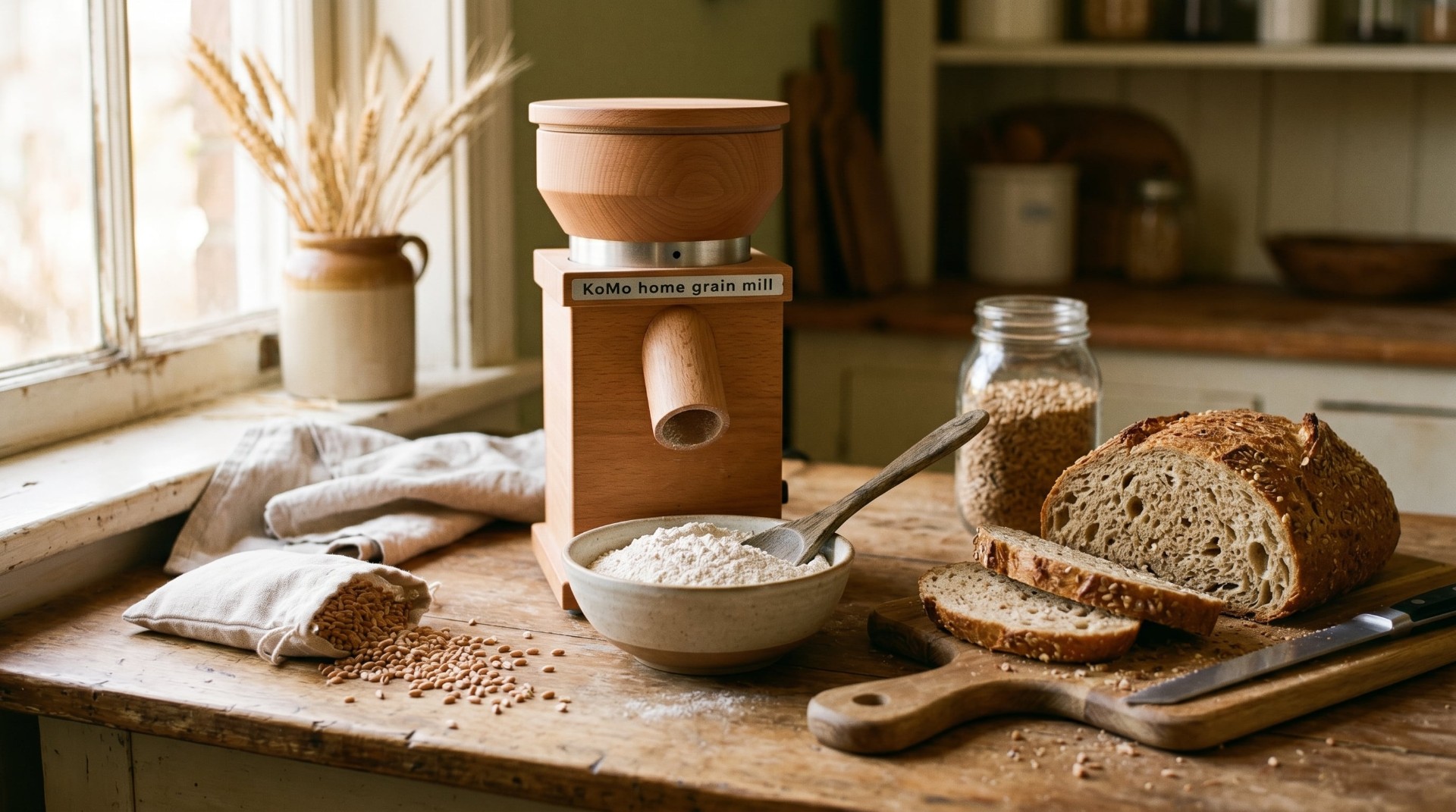
New to Fresh Milled Flour?
Start with our beginner pathway. Learn which grains to use, how to adapt recipes, and how to bake your first successful loaf.
Get your hands floury
Fresh Milled Recipes to Try First
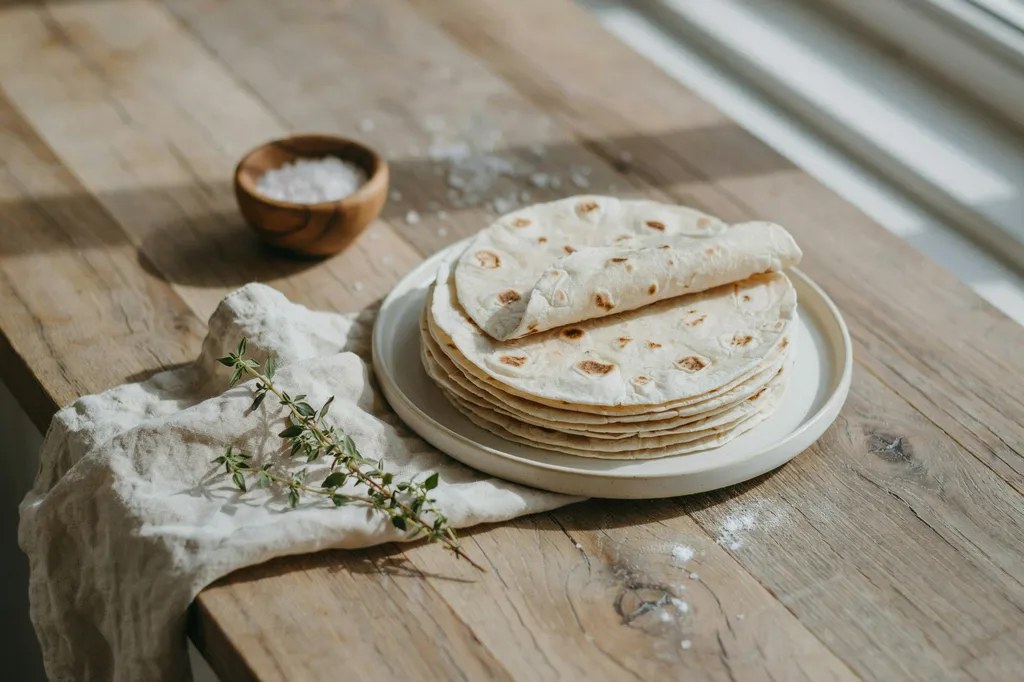
Fresh Milled Flour Tortillas
Fresh milled flour tortillas put store-bought to shame. The dough takes 10 minutes, no yeast, no proof — just mix, rest 30 minutes, roll, and griddle. The result is a soft, pliable tortilla with real wheat flavor that wraps without cracking. The key to soft tortillas is a small amount of fat and hot (not boiling) water. The fat coats the proteins and prevents toughness; hot water relaxes the dough so it rolls thin without springing back. Lard is traditional and best, but butter or neutral oil work well. Keep the heat moderate and don't overcook. Tortillas should puff slightly, develop a few brown spots, and remain flexible. Stack and wrap in a towel as you go so they steam soft. Makes 8 tortillas.
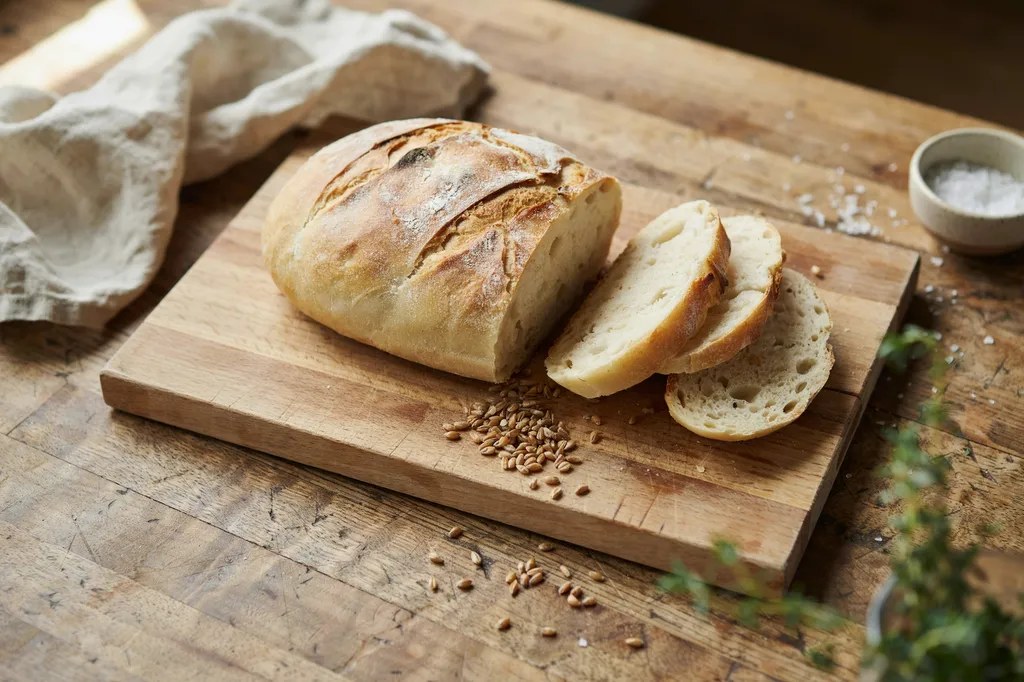
Spelt Sourdough
Spelt sits comfortably between modern wheat and einkorn on the difficulty curve. It has more gluten than einkorn but a softer, more extensible structure than hard wheat — meaning it stretches beautifully but tears if pushed too far. Fresh milled spelt makes for one of the most flavorful sourdough loaves you can bake, with a distinctive nuttiness and a soft, tender crumb. The rules: lower hydration, fewer folds, shorter bulk. Where a hard wheat dough might happily ferment 6 hours, a spelt dough often peaks in 4. Where wheat tolerates 4 sets of vigorous folds, spelt prefers 2 gentle ones. Cold retard is your friend — it firms the soft dough and dramatically improves scoring. Fresh milled spelt is also slightly more enzyme-active than hard wheat. That means more dough relaxation, more extensibility, and a faster ferment. If you have made fresh-milled wheat sourdough before, simply pull every step earlier by 25%. The loaf bakes to a beautiful golden brown with a softer crust than wheat. Crumb is open but not airy — somewhere between rustic country loaf and tender sandwich bread. Excellent for grilled cheese, French toast, and tomato sandwiches.
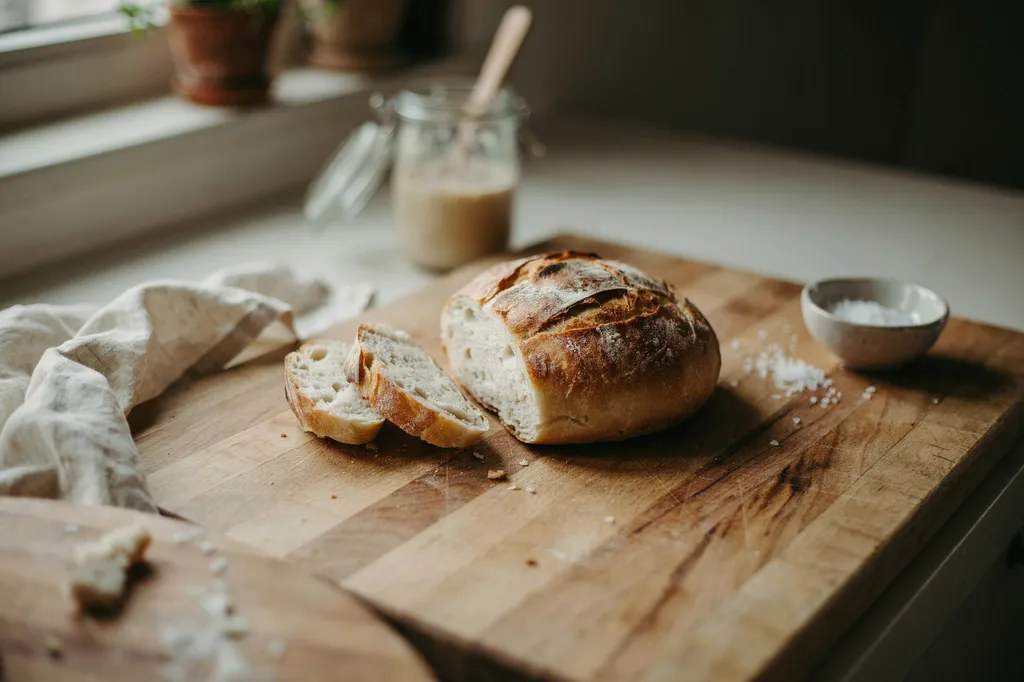
Beginner Fresh Milled Sourdough
If you have ever felt that fresh milled sourdough was reserved for experienced bakers, this recipe is designed to prove otherwise. Fresh milled flour behaves differently from store-bought whole wheat: the bran is sharper, the germ is still alive, and the flour drinks water more slowly. Beginners often get pucks and gum-line crumb not because they did something wrong, but because the recipe was never written for fresh flour in the first place. This loaf is. It uses 100% freshly milled hard white wheat for a mild flavor that wheat-skeptics actually enjoy, an extra-long autolyse so the bran fully hydrates, and a generous 78% hydration that fresh flour can comfortably handle. A slow overnight cold retard does most of the work — you get the flavor of a 24-hour sourdough without standing over the dough. The single biggest tip for a beginner: trust the timeline, not the clock. Fresh milled doughs ferment faster than white-flour recipes you may have made before, so watch for a 50–75% rise in bulk rather than a fixed two-hour window. Use a clear straight-sided container and mark the start line. If it hits that line in 4 hours instead of 6, shape early. You will also want a young, active starter. Feed it 6–10 hours before mixing so it peaks while you are autolysing. The recipe assumes a 100% hydration starter; if yours is stiffer, just bump the water by 10 g. No Dutch oven? A heavy cast-iron pan with a stainless bowl inverted on top works perfectly for the first 20 minutes of steam, which is the only part of the bake that really matters for ear and oven spring.
Einkorn Sourdough
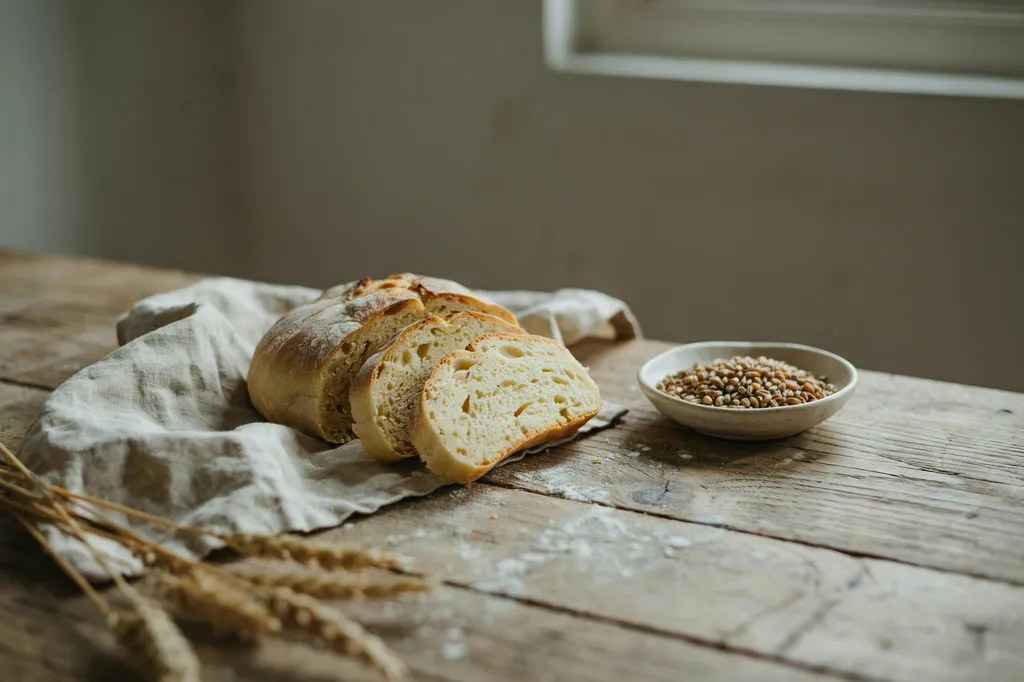
Einkorn is the oldest cultivated wheat — older than emmer, far older than modern bread wheat. Its kernels are tiny, its protein is high, but its gluten structure is fundamentally different: weak, fragile, and incapable of the long elastic windowpane modern doughs are famous for. Bakers who treat einkorn like modern wheat end up with sticky pancakes that collapse in the oven. The trick is to do less. Lower the hydration to 65%, mix briefly, fold gently, and finish bulk earlier than feels right. Einkorn dough should look slightly under-fermented when you shape it. The wild yeast will catch up during the cold retard. This recipe is designed for fresh milled einkorn berries specifically. Read [baking with einkorn](/grains/einkorn/baking-with-einkorn) and the [common einkorn baking mistakes](/grains/einkorn/einkorn-baking-mistakes) before your first loaf. Pre-ground einkorn flour you buy at the store has already lost some of the sweet grassy notes that make this loaf magical. Mill on a medium setting; finer flour absorbs too much water and dramatically increases stickiness. Expect a flat-ish boule. Einkorn does not bloom like hard white wheat. What it gives you in exchange is the most complex flavor profile of any single grain bread — honeyed, almost buttery, with a soft golden crumb that beginners often mistake for cake. Toast it the next day, drag it through olive oil, and you will understand why ancient bakers stuck with this grain for ten thousand years. If this is your first fresh milled loaf, it also helps to know [why fresh milled sourdough is different](/sourdough/why-fresh-milled-sourdough-is-different).
Featured Recipes
Rye Sourdough
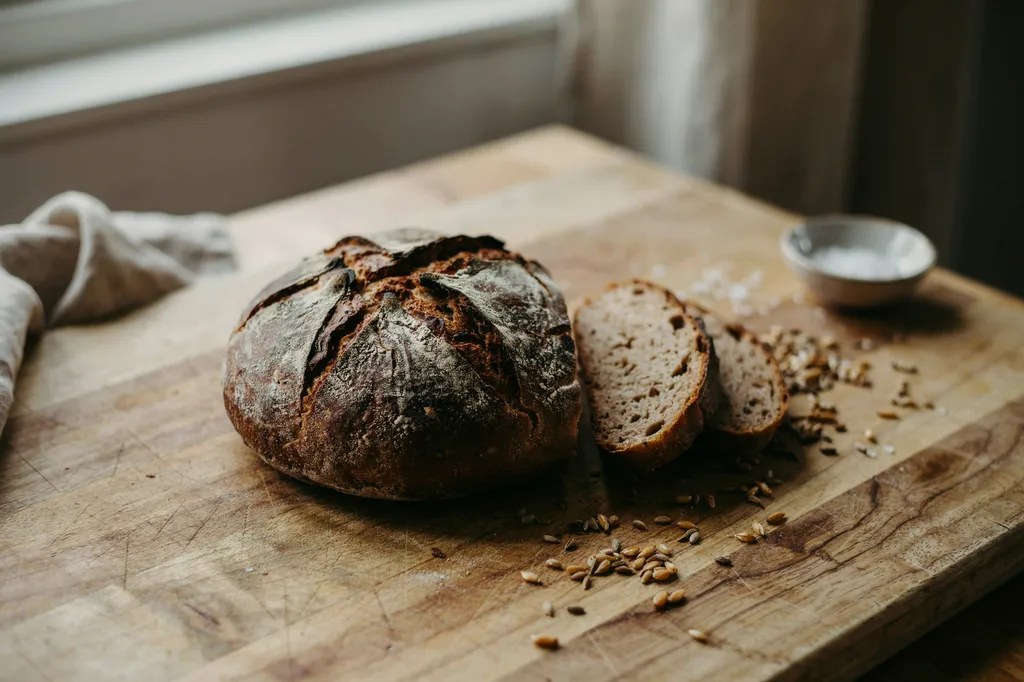
Rye is not wheat. It does not develop gluten the same way, it absorbs vastly more water, and it is colonized by enzymes (pentosans) that completely change how you handle it. Forget every shaping and folding technique you have learned. A 100% rye loaf is mixed like batter, scraped into a pan, proofed once, and baked low and long. This recipe uses freshly milled whole rye berries for maximum flavor and a fresh enzyme load that helps the dough rise. Hydration sits at 80% — anything less and the dough will be unworkable. Even at 80% it will feel like wet clay; that is correct. Fresh milled rye sourdough is a different bread tradition entirely. It is dense by design. It slices thin, keeps for a week, and is meant to be eaten with butter, smoked fish, hard cheese, or pickles. Do not try to make it open and airy — that is wheat thinking. The starter matters more than for any other bread. A vigorous, freshly fed 100% rye starter at peak is the difference between a beautifully risen loaf and a brick. If your starter is wheat-based, feed it twice with rye flour over 24 hours before mixing the dough.
Einkorn Sourdough
Einkorn is the oldest cultivated wheat — older than emmer, far older than modern bread wheat. Its kernels are tiny, its protein is high, but its gluten structure is fundamentally different: weak, fragile, and incapable of the long elastic windowpane modern doughs are famous for. Bakers who treat einkorn like modern wheat end up with sticky pancakes that collapse in the oven. The trick is to do less. Lower the hydration to 65%, mix briefly, fold gently, and finish bulk earlier than feels right. Einkorn dough should look slightly under-fermented when you shape it. The wild yeast will catch up during the cold retard. This recipe is designed for fresh milled einkorn berries specifically. Read baking with einkorn and the common einkorn baking mistakes before your first loaf. Pre-ground einkorn flour you buy at the store has already lost some of the sweet grassy notes that make this loaf magical. Mill on a medium setting; finer flour absorbs too much water and dramatically increases stickiness. Expect a flat-ish boule. Einkorn does not bloom like hard white wheat. What it gives you in exchange is the most complex flavor profile of any single grain bread — honeyed, almost buttery, with a soft golden crumb that beginners often mistake for cake. Toast it the next day, drag it through olive oil, and you will understand why ancient bakers stuck with this grain for ten thousand years. If this is your first fresh milled loaf, it also helps to know why fresh milled sourdough is different.
Beginner Fresh Milled Sourdough
If you have ever felt that fresh milled sourdough was reserved for experienced bakers, this recipe is designed to prove otherwise. Fresh milled flour behaves differently from store-bought whole wheat: the bran is sharper, the germ is still alive, and the flour drinks water more slowly. Beginners often get pucks and gum-line crumb not because they did something wrong, but because the recipe was never written for fresh flour in the first place. This loaf is. It uses 100% freshly milled hard white wheat for a mild flavor that wheat-skeptics actually enjoy, an extra-long autolyse so the bran fully hydrates, and a generous 78% hydration that fresh flour can comfortably handle. A slow overnight cold retard does most of the work — you get the flavor of a 24-hour sourdough without standing over the dough. The single biggest tip for a beginner: trust the timeline, not the clock. Fresh milled doughs ferment faster than white-flour recipes you may have made before, so watch for a 50–75% rise in bulk rather than a fixed two-hour window. Use a clear straight-sided container and mark the start line. If it hits that line in 4 hours instead of 6, shape early. You will also want a young, active starter. Feed it 6–10 hours before mixing so it peaks while you are autolysing. The recipe assumes a 100% hydration starter; if yours is stiffer, just bump the water by 10 g. No Dutch oven? A heavy cast-iron pan with a stainless bowl inverted on top works perfectly for the first 20 minutes of steam, which is the only part of the bake that really matters for ear and oven spring.
Fresh Milled Coffee Cake
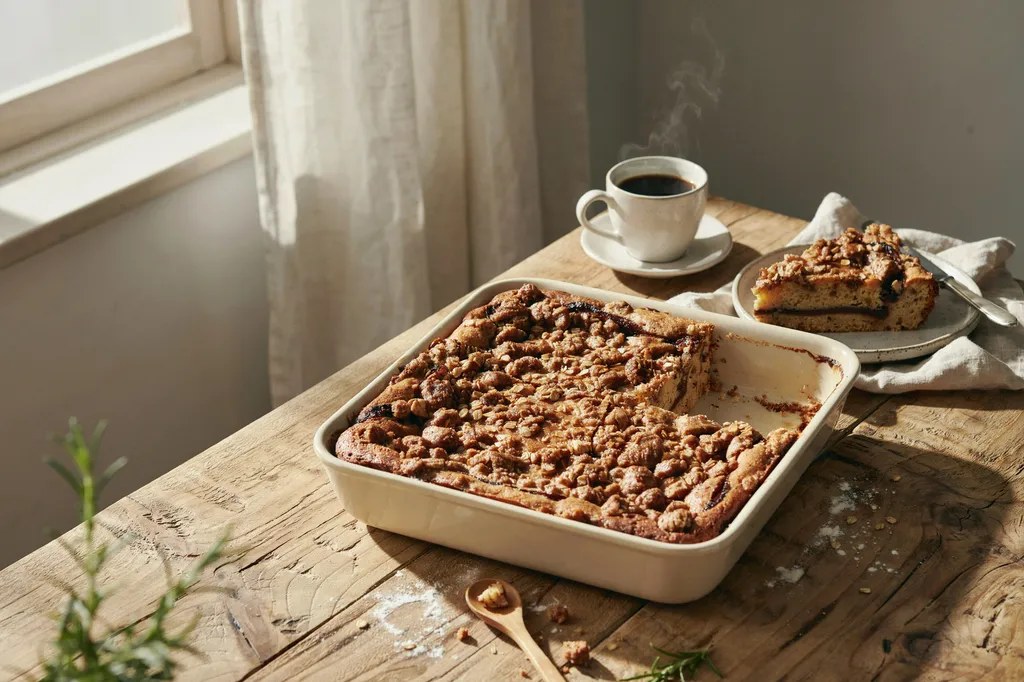
Coffee cake belongs in the fresh milled kitchen because the whole-grain flour adds depth that white flour cannot. Hard white wheat is the magic grain here: nutty enough to taste, mild enough that picky eaters won't notice it isn't a 'normal' coffee cake. The cake uses the creaming method (butter and sugar whipped) for a tender crumb, with sour cream for richness and tenderness. A cinnamon-brown sugar streusel does double duty: a swirl through the middle and a generous crumble on top. Two small tricks make the fresh milled version sing: a 10-minute rest of the wet batter before folding in flour (softens bran), and pulling the cake at 200°F internal temperature — fresh milled cakes dry out quickly when over-baked.
Fresh Milled Pita Bread
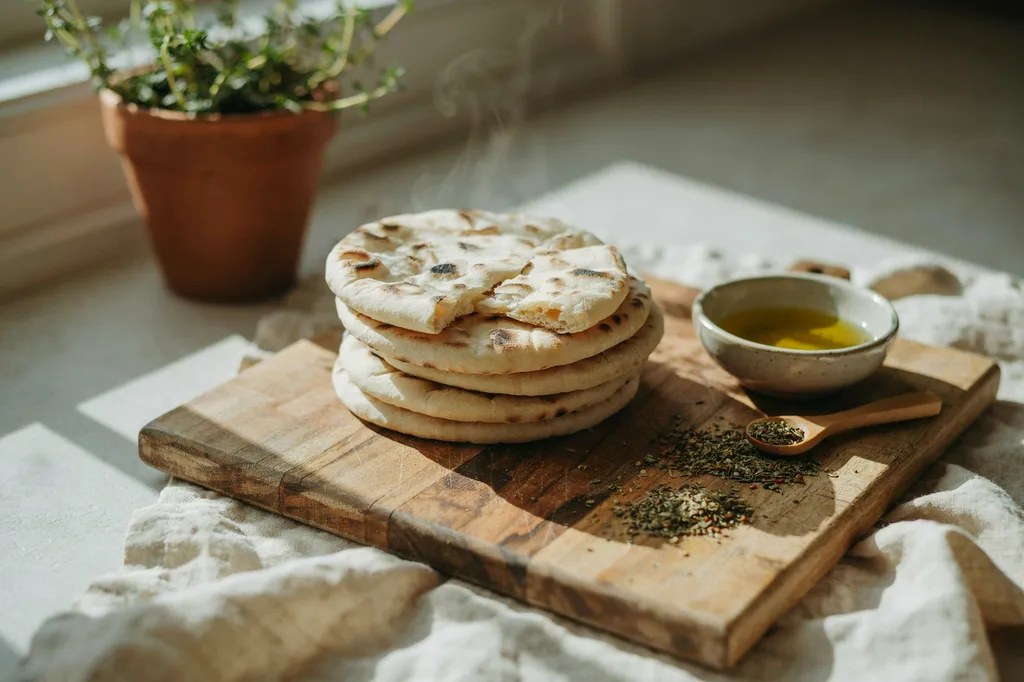
Pita is one of the great breads to bake at home: fast, flexible, and dramatic. The moment a thin disk hits a 500°F surface and balloons into a perfect pocket is one of the most satisfying sights in baking. Fresh milled hard white wheat makes pita that store-bought cannot match — sweet, nutty, soft, and substantially more flavorful. If you are still choosing a mill, a Mockmill 100 handles hard white easily, and it helps to understand what fresh milled flour actually is before you start. The dough comes together in one bowl, ferments once, and bakes in 3 minutes per round. Make a batch on Sunday for sandwiches all week. The pocket comes from steam expanding rapidly in a sealed, thin disk. Three things make it work: a fully preheated baking surface (steel, stone, or heavy upside-down sheet pan), even rolling, and not pricking or damaging the surface. If your first pita doesn't puff, increase oven temperature and roll thinner.
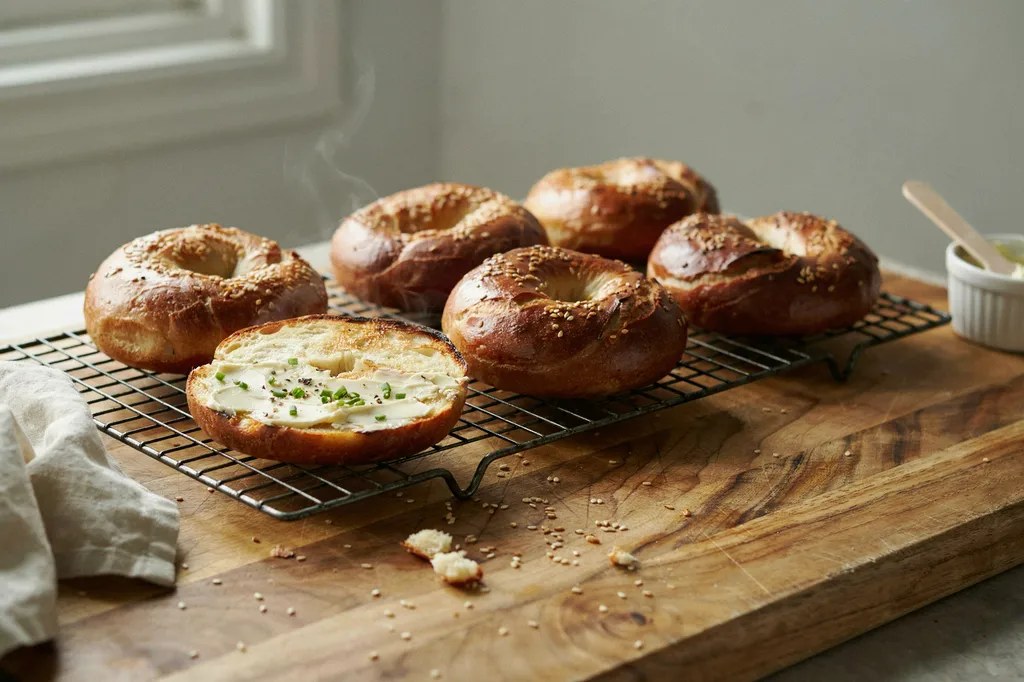
Sourdough Bagels
A real bagel is stiff, dense, glossy, and almost meaty in the chew — closer to a New York deli bagel than a soft bread roll. Fresh milled sourdough bagels take that traditional recipe and elevate it: the fresh wheat brings nuttiness, the long cold ferment brings depth, and the home-mill flour creates a crumb you cannot get from anything pre-ground. Do not be put off by the boiling step. It takes 5 minutes total and is what gives bagels their signature gloss and chew. Barley malt syrup in the water adds shine and flavor — if you cannot find it, honey works. The dough is intentionally low hydration (60%). It will feel tight, almost cookie-dough stiff. That is correct. A wet bagel dough produces a soft roll instead of a proper bagel. Makes 8 large bagels.
Most Popular Recipes
Beginner Fresh Milled Sourdough
If you have ever felt that fresh milled sourdough was reserved for experienced bakers, this recipe is designed to prove otherwise. Fresh milled flour behaves differently from store-bought whole wheat: the bran is sharper, the germ is still alive, and the flour drinks water more slowly. Beginners often get pucks and gum-line crumb not because they did something wrong, but because the recipe was never written for fresh flour in the first place. This loaf is. It uses 100% freshly milled hard white wheat for a mild flavor that wheat-skeptics actually enjoy, an extra-long autolyse so the bran fully hydrates, and a generous 78% hydration that fresh flour can comfortably handle. A slow overnight cold retard does most of the work — you get the flavor of a 24-hour sourdough without standing over the dough. The single biggest tip for a beginner: trust the timeline, not the clock. Fresh milled doughs ferment faster than white-flour recipes you may have made before, so watch for a 50–75% rise in bulk rather than a fixed two-hour window. Use a clear straight-sided container and mark the start line. If it hits that line in 4 hours instead of 6, shape early. You will also want a young, active starter. Feed it 6–10 hours before mixing so it peaks while you are autolysing. The recipe assumes a 100% hydration starter; if yours is stiffer, just bump the water by 10 g. No Dutch oven? A heavy cast-iron pan with a stainless bowl inverted on top works perfectly for the first 20 minutes of steam, which is the only part of the bake that really matters for ear and oven spring.
Fresh Milled Pita Bread
Pita is one of the great breads to bake at home: fast, flexible, and dramatic. The moment a thin disk hits a 500°F surface and balloons into a perfect pocket is one of the most satisfying sights in baking. Fresh milled hard white wheat makes pita that store-bought cannot match — sweet, nutty, soft, and substantially more flavorful. If you are still choosing a mill, a Mockmill 100 handles hard white easily, and it helps to understand what fresh milled flour actually is before you start. The dough comes together in one bowl, ferments once, and bakes in 3 minutes per round. Make a batch on Sunday for sandwiches all week. The pocket comes from steam expanding rapidly in a sealed, thin disk. Three things make it work: a fully preheated baking surface (steel, stone, or heavy upside-down sheet pan), even rolling, and not pricking or damaging the surface. If your first pita doesn't puff, increase oven temperature and roll thinner.
Rye Sourdough
Rye is not wheat. It does not develop gluten the same way, it absorbs vastly more water, and it is colonized by enzymes (pentosans) that completely change how you handle it. Forget every shaping and folding technique you have learned. A 100% rye loaf is mixed like batter, scraped into a pan, proofed once, and baked low and long. This recipe uses freshly milled whole rye berries for maximum flavor and a fresh enzyme load that helps the dough rise. Hydration sits at 80% — anything less and the dough will be unworkable. Even at 80% it will feel like wet clay; that is correct. Fresh milled rye sourdough is a different bread tradition entirely. It is dense by design. It slices thin, keeps for a week, and is meant to be eaten with butter, smoked fish, hard cheese, or pickles. Do not try to make it open and airy — that is wheat thinking. The starter matters more than for any other bread. A vigorous, freshly fed 100% rye starter at peak is the difference between a beautifully risen loaf and a brick. If your starter is wheat-based, feed it twice with rye flour over 24 hours before mixing the dough.
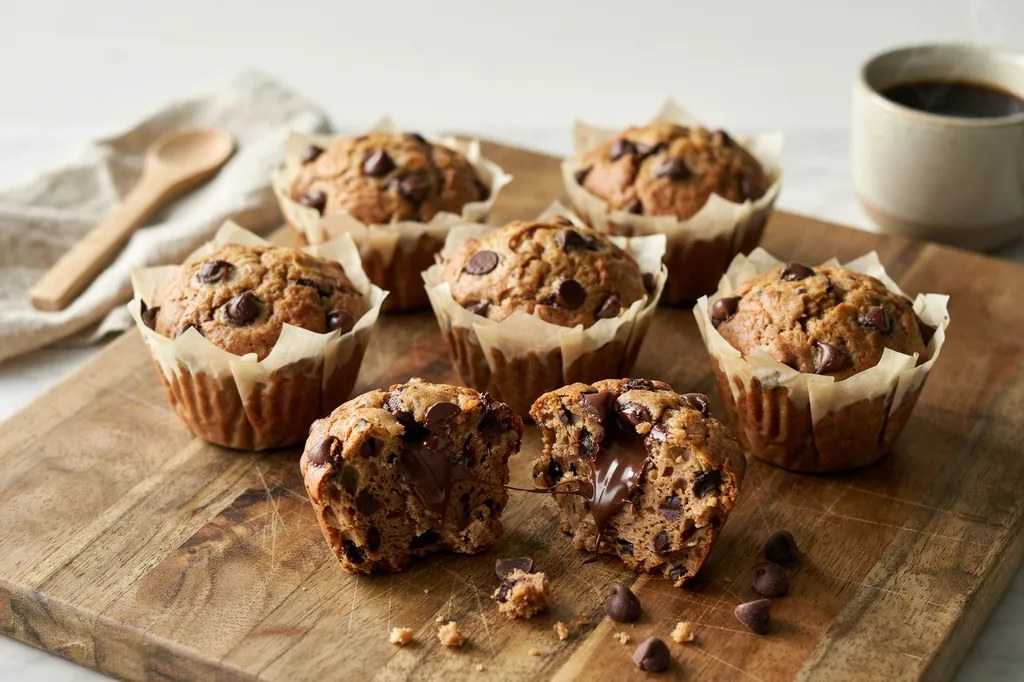
Fresh Milled Chocolate Chip Muffins
Soft, family-friendly chocolate chip muffins made with freshly milled wheat. Yields 12 muffins. Prep 15 min, bake 20 min, rest 5 min in pan.
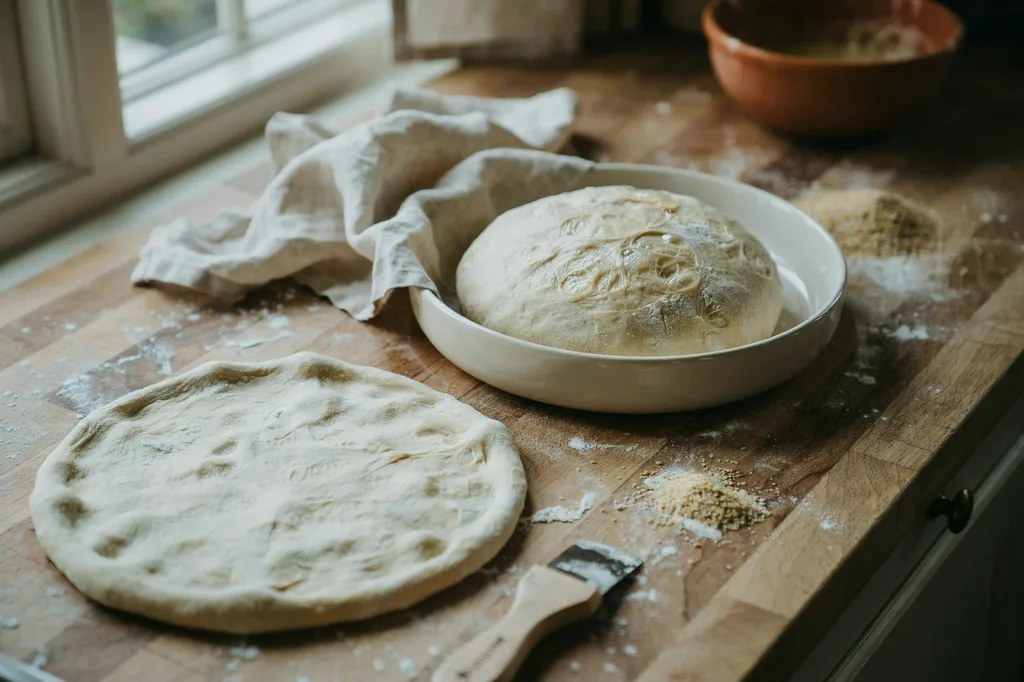
Sourdough Pizza Dough
Fresh milled sourdough pizza is what happens when artisan bread technique meets pizza night. The same overnight cold ferment that builds flavor in a boule turns this dough into a chewy, blistered, complex crust that puts delivery to shame. The target hydration is 68% — high enough to produce open, leoparded edges, low enough to stretch on a peel without tearing. Fresh milled hard white wheat keeps the flavor clean and lets the toppings shine, but you can blend in up to 25% hard red for a more rustic, pizzeria-style crumb. The dough is built once, bulk fermented short, then divided and refrigerated 24–48 hours. Each ball comes out smelling like a wine cave and stretches like silk. Bake on a preheated steel or stone — pizza on a sheet pan will never give you the bottom char this dough deserves. Makes 4 ten-inch personal pizzas or 2 large pies.
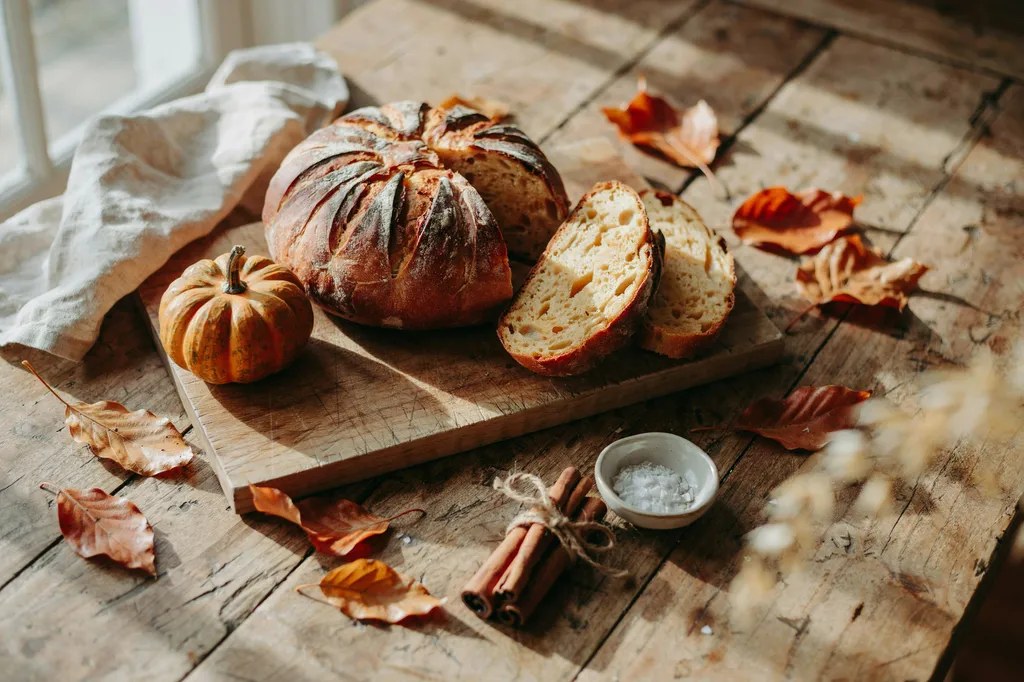
Pumpkin Sourdough Bread
Pumpkin sourdough is what happens when fall produce meets serious bread technique. The pumpkin puree replaces about a quarter of the water, contributing color, sweetness, and a soft tender crumb. Warm spices — cinnamon, nutmeg, allspice, clove — make it unmistakably seasonal without crossing into dessert territory. Use canned pumpkin puree (not pie filling) or roasted and pureed sugar pumpkin. The water content matters: drain canned puree on a paper towel for 10 minutes to prevent an overly slack dough. Pepitas (pumpkin seeds) folded in at the second stretch add crunch and reinforce the theme. This is the loaf for Thanksgiving morning toast, leftover-turkey sandwiches, and bread baskets all autumn long.
Knowledge Center
Learn Fresh Milled Baking
In-depth guides on milling, hydration, gluten, fermentation, and troubleshooting — start with the beginner pathway or jump into a featured guide.
Fresh Milled Flour Troubleshooting Guide
Fresh-milled bread fails in predictable ways. After thousands of loaves, the same handful of symptoms appear over and over: dense crumb, dry crumb, gummy crumb, poor rise, collapsed top, pale crust. This guide is organized by symptom so you can jump straight to your problem, see the most likely cause, and apply the specific fix on your next bake. If multiple symptoms apply, work through them in the order listed — hydration first, then fermentation, then technique. For deeper coverage of any single issue, the linked grain hubs and technique guides go further.
Fresh Milled Flour Hydration Guide
Hydration is the single variable that fixes more fresh-milled bread problems than any other adjustment. Bagged bread flour is engineered to behave predictably — milled to a uniform fine particle, aged for weeks, and stripped of the thirsty bran and germ. Fresh-milled flour is the opposite: it contains every part of the kernel, and the intact bran soaks up water slowly. The same recipe that produces a slack, sticky white-flour dough produces a dry, tight fresh-milled dough unless you increase the liquid. This guide explains why hydration matters more for fresh flour, how each grain behaves, how to read dough texture by feel, how to convert standard recipes, and how to troubleshoot the most common hydration symptoms.
How To Store Wheat Berries for Long-Term Freshness
Whole wheat berries are nature's near-perfect storage food. As long as the bran is intact and the grain is dry, the germ stays dormant and the oils stay stable. Most home bakers do not need decades of shelf life, but the same techniques that let preppers store grain for thirty years let you keep a 25-pound bag fresh for two or three. This guide covers the four storage variables that actually matter — container, moisture, temperature, and oxygen — explains realistic shelf-life windows, and lists the locations in a typical home that work best (and worst). For sealed bag basics and quick-rotation tips, see also our shorter store wheat berries primer.
Sourdough Knowledge Center
Learn Fresh Milled Sourdough
Build a starter, master hydration, and troubleshoot every common fresh-milled sourdough problem — the complete sourdough authority cluster.
Popular Grains
Popular Techniques
How To Build Gluten With Fresh Milled Flour
Gluten development in fresh-milled flour is a different craft than in commercial white flour. White-flour doughs love aggressive kneading, slap-and-folds, and stand mixers on high — the smooth endosperm forms long uninterrupted gluten strands quickly. Fresh-milled flour cannot work that way because the bran physically interrupts every gluten strand it touches. The bakers who get gorgeous open crumb out of fresh flour all do the same thing: hydrate fully, rest patiently, fold gently, and choose the right grain. This guide walks through the science and the technique.
Why Does My Bread Collapse?
A collapsed loaf is the most disappointing failure in baking — the dough rose beautifully, the oven smelled right, and then the top sank into a wrinkled crater. The good news is that collapse has only four root causes and each leaves a different fingerprint. This guide walks through the diagnostic signs of each, explains what is happening inside the dough at the moment of collapse, and prescribes the specific fix for your next bake. The same four causes apply to sandwich bread, artisan boules, sourdough, and pizza crust.
Fresh Milled Flour Troubleshooting Guide
Fresh-milled bread fails in predictable ways. After thousands of loaves, the same handful of symptoms appear over and over: dense crumb, dry crumb, gummy crumb, poor rise, collapsed top, pale crust. This guide is organized by symptom so you can jump straight to your problem, see the most likely cause, and apply the specific fix on your next bake. If multiple symptoms apply, work through them in the order listed — hydration first, then fermentation, then technique. For deeper coverage of any single issue, the linked grain hubs and technique guides go further.
Popular Troubleshooting
Why is my crumb too open and holey?
Bread shows large, uneven holes instead of a balanced, even crumb structure.
Why does my bread taste too yeasty?
Bread has a strong, alcoholic, or beer-like yeast flavor that overpowers the grain.
Why is my whole wheat bread so crumbly?
Whole wheat loaves crumble when sliced, fall apart in sandwiches, or do not hold together cleanly.
Popular Conversions
All-Purpose Flour to Hard Red Wheat (Fresh-Milled)
Swap 1:1 by weight (not volume). Add 7–10% extra water and let the dough autolyse 30–60 minutes so bran can fully hydrate before strength building. Expect bulk fermentation to move 15–25% faster than AP. If a recipe calls for AP and asks for windowpane, accept a slightly weaker membrane — fresh red wheat will still build strength with stretch-and-folds.
Bread Flour to Hard White Wheat (Fresh-Milled)
Swap 1:1 by weight and add 5–8% more water. A 20–40 minute autolyse helps; sifting 10–15% of the coarsest bran makes the crumb nearly indistinguishable from a bread-flour loaf. Fermentation runs ~10–20% faster than bread flour.
Bread Flour to Hard Red Wheat (Fresh-Milled)
Swap 1:1 by weight and add 7–10% more water. Always autolyse 30–60 minutes — bran needs time to soften before gluten can fully develop. Plan for 3–4 stretch-and-folds during bulk. Fermentation is 15–25% faster than with bread flour. Expect a slightly less open crumb than a white bread-flour loaf, especially at the same hydration.
Most-Cited Answers
Quick answers to the questions new fresh milled bakers ask most.
Buyer's Guides
Choose a grain mill
Stone and impact mills compared head-to-head — the right pick depends on how often you bake and which grains you use most.
Mockmill 100
The most popular entry-level stone mill for home bakers. Compact, quiet, and extremely easy to use.
NutriMill Harvest
The Harvest is NutriMill's stone burr mill — a departure from their classic impact design. It uses Austrian-made stones, a 450-watt motor, and an attractive bamboo-and-metal housing. Significantly quieter than the Classic and produces finer flour, but throughput is lower.
KoMo Fidibus 21
The Fidibus 21 is KoMo's compact stone burr mill with a 250-watt motor and corundum-ceramic stones. It mills about 100 g/minute on the finest setting and is built into a beechwood housing handmade in Austria. A great entry into the KoMo lineup at a lower price than the Classic.
Why fresh milled flour
Better flavor. Better nutrition. Better baking.
Better Flavor
Fresh milled flour is sweeter, nuttier, and more complex than store-bought — flour that's days old, not months.
Better Nutrition
The bran and germ stay intact, preserving fiber, vitamins, and natural oils that commercial flour strips away.
Better Baking
Once you understand how to handle it, fresh milled flour produces bread, pizza, and pastries with real character.
Start with our complete guide to fresh milled flour. Ready to go deeper? Read our complete guide to sourdough with fresh-milled flour, learn how to store wheat berries and fresh-milled flour, or meet the team behind Just Fresh Milled.